Collecting a brand new car brings a particular kind of satisfaction, along with a natural desire to preserve that showroom finish for as long as possible. It is understandable, then, that one of the most common questions we receive from new car owners across Essex concerns timing: should the vehicle be washed before the ceramic coating is applied, or should the coating go on immediately?
The answer sits somewhere between the two extremes.
New Does Not Always Mean Flawless
It is a natural assumption that a car fresh from the factory or the dealership forecourt has perfect paintwork. In practice, this is rarely true. Vehicles commonly pick up light swirling and marring during transport, during dealership preparation and pre-delivery checks, and occasionally even during production. Under standard lighting, none of this is usually visible, but under a proper direct light, most new cars reveal at least some degree of imperfection.
This matters because automotive ceramic coating in Lakeside does not conceal what lies beneath it. The coating is transparent, and it preserves the paintwork exactly as it finds it. Apply a coating over existing swirl marks, and those marks are sealed in for the working life of the coating.
Why Preparation Comes Before Application
Before any coating goes on, the paintwork needs to be properly assessed and prepared. That starts with a thorough decontamination wash — removing transport residues, manufacturer wax, tar deposits, and the general contamination a car picks up between the factory and the customer’s driveway. This is a different process entirely from a standard automatic car wash, where worn brushes and poor-quality materials can introduce fresh scratches rather than remove existing ones.
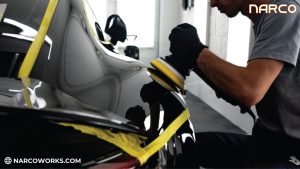
Once the paintwork is properly clean, it can be inspected under the right lighting to identify any swirl marks or imperfections present before delivery. Where something is found, paint correction evens out the finish before coating—leaving a genuinely sound base, rather than one that only looks acceptable at a glance.
Getting the Process Right From the Start
Whether to wash first or coat first was never really the question. What matters is whether the paintwork is properly inspected and, where required, corrected before anything gets sealed in for good. Coat a car without checking it over, and any existing defects stay there permanently. Wash it the wrong way, and you risk introducing new ones. The sensible route is professional decontamination, a proper inspection, correction if it is needed, and coating only once the paintwork has been confirmed sound.
New cars also benefit from timing. The sooner this process happens, the less exposure the paintwork has had to sunlight, road grime, and general wear. Booking an automotive ceramic coating in Lakeside within the first few weeks of ownership gives the paintwork the best possible start—protecting it before it has had any real opportunity to pick up damage.
Final Note
This was never a straightforward choice between washing first and coating first. The deciding factor is whether the paintwork has been properly inspected and corrected where necessary before anything is locked in place. Handle that correctly, and a new car keeps its showroom finish from the outset, rather than needing costly restoration further down the line. For anyone who has just picked up a new car, that early attention makes all the difference.
If you have recently taken delivery of a new car and want it looked after properly from day one, get in touch with Narco Bodyworks, and we will talk you through the right process for your vehicle.
Frequently Asked Questions
1. How soon should you apply ceramic coating after buying a new car?
As soon as practical—ideally within the first few weeks. The less time the paintwork spends unprotected, the lower the risk of scratching, contamination, or early fading.
2. Could washing a new car damage it before coating?
Yes, if it is done badly. Automatic car washes and poor-quality materials are a common cause of light scratching. A professional decontamination wash avoids this and prepares the paintwork properly.
3. Does a new car really need paint correction before coating?
Often, yes. Many new cars pick up light swirl marks during transport or dealership preparation, and these usually only become visible under proper inspection lighting.
4. Can ceramic coating hide existing scratches or swirl marks?
No. The coating is transparent and preserves whatever is beneath it. Any imperfections need correcting before application, not after.
5. How long does ceramic coating last on a new car?
That depends on the product used and the number of layers applied, but a professionally applied coating usually protects the paintwork for several years with the right aftercare. We are happy to advise on the best option for your car.