Most car owners put real effort into keeping their paintwork clean. A regular wash, maybe a wax now and then — the outside gets attention. The inside? That tends to get forgotten until the smell of stale coffee and a backseat full of crumbs becomes too much to ignore.
Car interior detailing in Essex is more popular than ever, and for good reason. Every trip is better when the cabin is clean and well-kept, and the car’s value goes up over time. Whether you are tackling it yourself or thinking about handing it over to someone who does this for a living, here’s what a proper interior detail actually involves.
Car Interior Detailing in Essex: What the Process Actually Covers
A thorough interior detail is not a quick hoover and a wipe-down. There are steps that need to be done in a certain order to clean every part of the car.
Start with a proper vacuum
Pull the mats out first. Then vacuum the seats, carpets, storage pockets, and boot. The goal is to lift out as much loose dirt and grit as possible before any liquid cleaner touches anything — because wet grit scratches.
Fabric seats
Fabric seat covers are generally hardwearing, but they hold onto dust, crumbs, and the occasional mystery stain better than most surfaces in the car. For routine cleaning:
- Use a good foam cleaner — one that keeps moisture low for faster drying
- Apply with a clean microfibre cloth and wipe away
- For stubborn stains, work the foam in gently with a soft brush, following the product instructions, then wipe and air dry
Leather seats
Leather needs a slightly more considered approach. Modern car leather is thinner than it used to be – gone are the days of heavy-duty conditioning – but it still benefits from a proper clean.
- Use a leather cleaner that contains conditioning oils; this handles cleaning and conditioning in one step
- Apply with a soft cloth; use a small brush (a nail brush works well) on tougher marks
- Wipe away with a dry microfibre cloth and allow to air dry fully
Alcantara and suede
Genuine suede is rare in modern cars, having largely given way to Alcantara — the synthetic lookalike used by most manufacturers. For Alcantara:
- Brush the surface first to lift any embedded dirt, and then vacuum it
- Spray a purpose-designed Alcantara cleaner sparingly and wipe with a microfibre cloth
- For stubborn marks, work the cleaner in with a brush, then wipe away with a lightly damp cloth — never soak it
Mats, carpets, and door shuts
Whatever comes in on your shoes ends up here. These areas need a bit more effort:
- Clean mats outside the car — rubber ones can be washed; fabric ones should be brushed, vacuumed, and shampooed
- Try not to over-wet carpets; they take time to dry, and damp interiors cause condensation overnight
- The door shut gets overlooked constantly — clean it with an all-purpose automotive cleaner, and a light wax on the painted sections makes future cleaning easier. The hinge area and the underside of the door deserve attention, too
Plastic and rubber trims
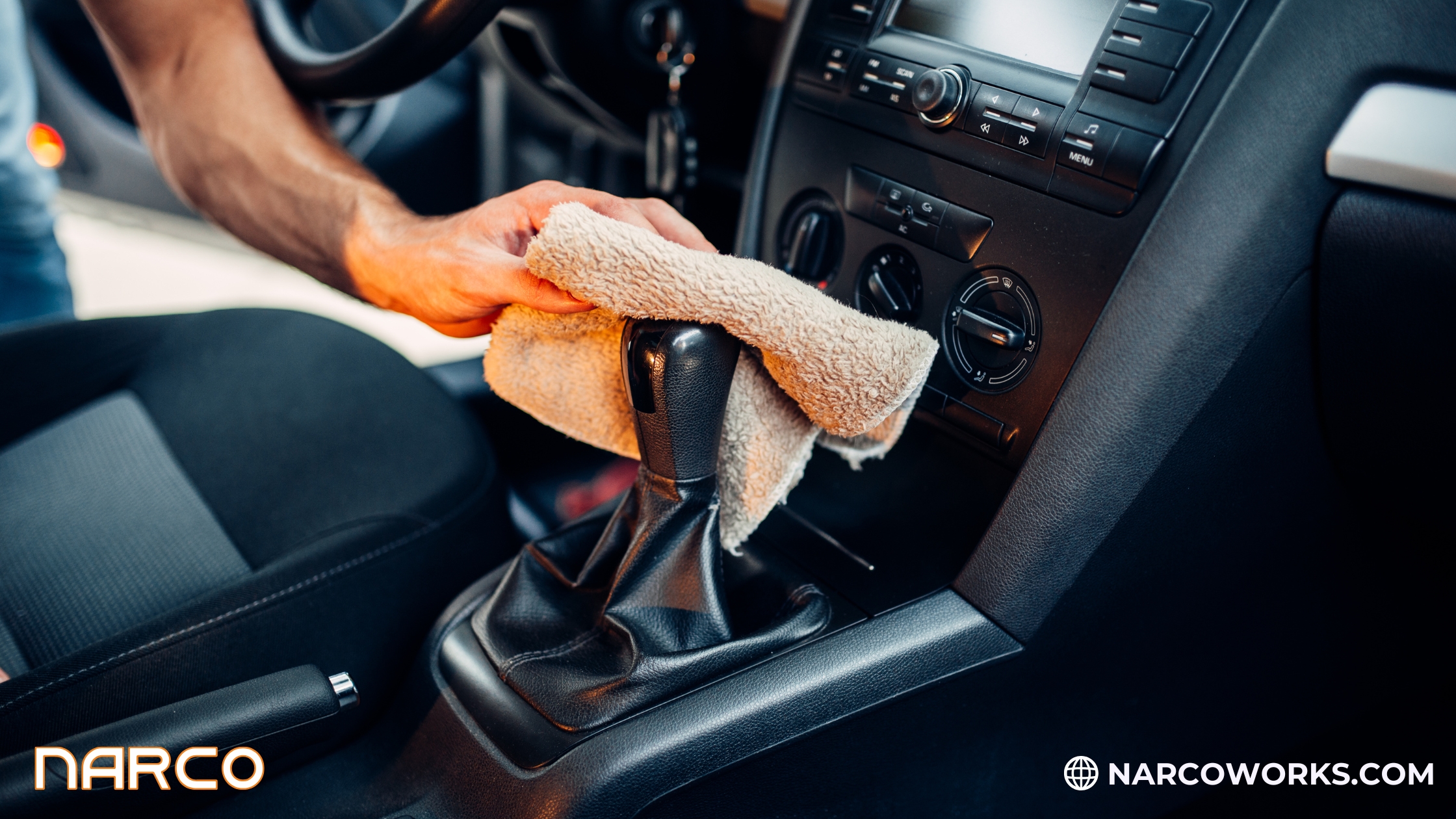
Dashboards, the centre console, door panels, the gearshift – all these surfaces collect dust and fingerprints quietly.
- Wipe down with a soft, slightly damp cloth — an old toothbrush is genuinely useful for getting into seams and between trim panels
- Follow up with a purpose-designed interior plastic cleaner for a clean finish
- A thin smear of petroleum jelly — or a light oil — on the rubber door seals goes a long way. It keeps them pliable and stops water finding its way in
The interior windscreen
Probably the most neglected surface in any car. Grease, condensation, and the combined effect of eating and breathing in a sealed cabin leave the inside of the glass filmy and streaky:
- You may mix warm water with a small amount of white vinegar and wipe carefully with a microfibre cloth — avoid soaking the interior
- Dry with a waffle cloth, which absorbs moisture well
- Follow up with a glass cleaner — a little goes a long way here. Use two separate soft cloths: one to apply, one to buff off
Why Handing It Over to a Professional Makes Sense
With the right products and a free afternoon, you can work through all of this yourself and get solid results. The honest truth, though, is that professional interior detailing produces a finish that’s hard to replicate at home. The products are stronger, the techniques are more refined, and the time investment is yours to reclaim.
Narco Bodyworks, based at Lyon Business Park in Barking, offers full interior and exterior car detailing in Essex as part of their wider range of vehicle services. Alongside car interior detailing, they cover paint correction, ceramic coating, PPF, window tinting, SMART repairs, and alloy wheel repairs — all from one location.
Our car interior detailing service in Essex covers all of the above and more — deep cleaning seats, carpets, trims, and glass to a standard that a quick home clean simply cannot match. For drivers in and around Essex, it’s the kind of service worth booking before the interior gets to a point where DIY is genuinely daunting.
Ready to hand it over? Get in touch with Narco Bodyworks for a quote — our team will take care of it from start to finish.
FAQs: Car Interior Detailing in Essex
1. How frequently should I clean my car’s inside?
For most drivers, a full interior detail once or twice a year keeps things in good condition. If you drive frequently, have kids or pets in the car, or eat on the go, every three to four months is a more realistic target. Narco Bodyworks can advise on a schedule that suits your usage.
2. What’s the difference between a basic clean and a full interior detail?
A basic clean covers the obvious surfaces — a hoover, a wipe-down, and perhaps a spray on the dash. A full interior detail goes much further: deep cleaning seats (fabric, leather, or Alcantara), treating carpets and mats, conditioning trims, cleaning door shuts, and properly sorting the interior glass. The results are noticeably different.
3. Can professional detailing remove bad smells from a car interior?
Yes — in most cases. Odours from food, pets, smoke, or damp tend to sit in fabric seats and carpets. A thorough deep clean of those surfaces, combined with proper drying, removes the source of the smell rather than masking it. Narco Bodyworks’ car interior detailing service in Essex addresses exactly this.
4. Will detailing damage my leather seats?
When done correctly, interior detailing actually protects leather rather than damaging it. The key is using the right products — a leather cleaner with conditioning properties keeps the material clean, soft, and less prone to cracking. A professional detailer will know which products to use for your specific seat type.
5. How long does a professional interior detail take?
It depends on the size of the vehicle and its condition, but most full interior details take between two and four hours. If the car needs significant work — heavy staining, embedded grime, or odour treatment — it may take longer. Narco Bodyworks will give you a realistic timeframe when you get in touch for a quote.