Every November, without ceremony, the gritters come out. The slow, invisible damage begins along the A13, across the Thurrock roundabouts, and down the slip roads off the M25. Road salt is one of those things that most drivers vaguely know are hazardous for a car, then promptly forget about until they spot rust bubbling beneath a wheel arch the following spring.
At Narco Works, we are the specialists, providing car ceramic coating in Grays and surrounding locations. If you’ve been wondering whether ceramic coating is genuinely worth the investment, road salt is one of the most compelling reasons to take it seriously. Not for the show, not for the glossy finish—but because of what salt actually does to unprotected paintwork and how silently it does it.
What Road Salt Actually Does to Your Car
Salt reduces the freezing point of water. Which is why local councils often spread them across the streets. When the salt mixes with moisture and road grime, it becomes something considerably more aggressive: a corrosive solution that clings to the underbody, the lower door sills, the wheel arches, and — crucially — any microscopic imperfection in your paintwork.
The chemistry is straightforward and fairly brutal. Salt accelerates the electrochemical reaction between metal and oxygen. That reaction is rust. On a car with pristine factory paint, this process is slow. On a car with even a small chip, a fine crack in the lacquer, or previous unrepaired damage, salt finds exactly the foothold it needs.
Drivers who commute regularly through Essex — particularly on roads like the A126 between Grays and Purfleet, or along the industrial stretches near Tilbury — are putting cars through a genuinely punishing cycle from November through March. Heavy lorry traffic churns up road spray. That spray is loaded with salt, grit and debris, and it doesn’t just hit the bumper — it coats everything at a low level, every single day.
What Ceramic Coating Actually Does (and Doesn’t Do)
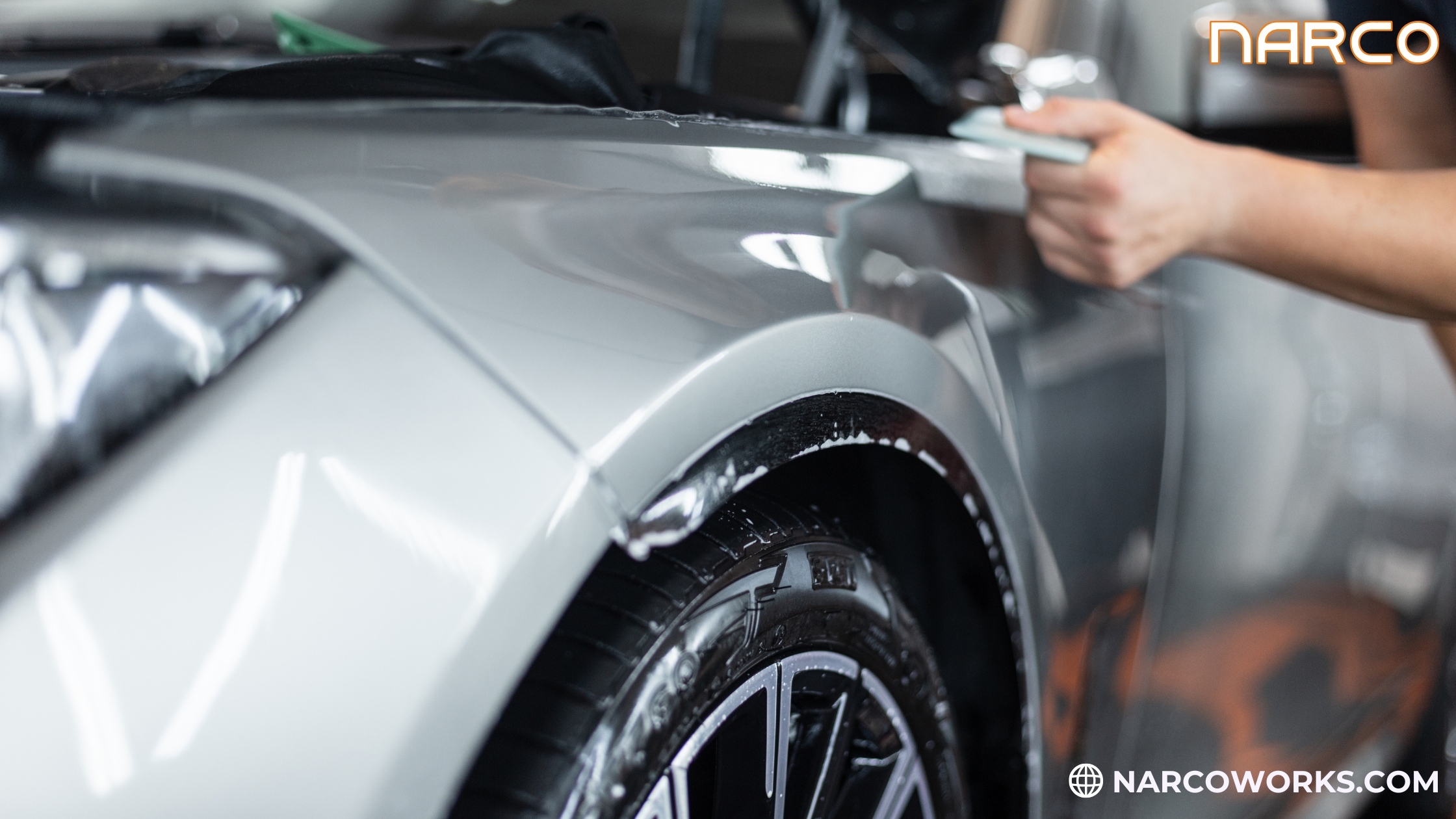
Before getting into whether it’s worth it, it’s important to be clear-eyed about what ceramic coating is. It is not armour. It won’t stop a stone chip or save a panel that’s already been compromised. What it does is create a chemically bonded, hydrophobic layer over your existing paintwork — one that stops contaminants from penetrating the surface and makes them considerably easier to remove before they cause damage.
In the context of road salt, this matters in two specific ways.
- First, salt can’t bond to a properly coated surface the way it can to bare or waxed paint. Where untreated paint is porous at a microscopic level, ceramic coating fills those pores and creates a smooth, sealed surface. Salt-laden water beads up and runs off rather than sitting and soaking in.
- Second, when it does reach your car — and it will, because road spray is unavoidable — a coated surface is dramatically easier to rinse clean. The salt doesn’t get the time it needs to begin doing its work. A quick wash matters far more when the coating is doing the heavy lifting beneath it.
The Science Behind It: What Ceramic Coating Is Actually Made Of
If the term “ceramic” conjures images of pottery or tiles in your mind, you must know that they don’t have much to do with what’s really happening at a molecular level on your car’s paintwork.
In reality, the active ingredient in most professional-grade ceramic coatings is silicon dioxide (SiO₂), a compound derived from quartz. Some formulations also incorporate titanium dioxide (TiO₂) for additional UV resistance, or graphene oxide for improved heat dispersion — but SiO₂ remains the backbone of the technology.
What makes it effective is how it behaves when applied. Traditional wax sits on top of the clear coat. It creates a temporary layer that degrades quickly through UV exposure, rain, and washing — typically lasting weeks to a couple of months at best. Ceramic coating doesn’t sit on top. The natural “covalent bonding” process creates a semi-permanent matrix on the paintwork surface.
The coating itself is made up of nanoparticles — particles so small they operate at scales measured in nanometres, roughly a hundred thousand times thinner than a human hair. Once applied, ceramic coating doesn’t simply dry. It cures. It is a chemical process through which the SiO₂ cross-links and hardens into its final bonded state. This typically takes between 24 and 48 hours for the initial cure, with a full hardening process that continues over several weeks.
What About Older or Already Damaged Cars?
Once, a customer asked us: Can You Apply Ceramic Coating to an Old or Damaged Car?
This is where many people assume ceramic coating isn’t for them — and it’s worth addressing directly, because the assumption is mostly wrong.
Ceramic coating can be applied to any car, regardless of age. The caveat is that it locks in whatever is beneath it. If the paint has existing swirl marks, oxidation, or surface scratches, the coating will amplify those imperfections rather than hide them.
That’s not a reason to walk away from coating entirely — it’s a reason to have the paint properly assessed and corrected first.
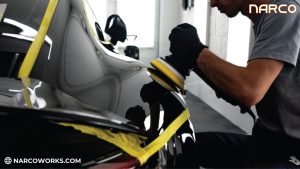
For a car that’s spent a few winters on Essex roads, paint correction beforehand is often the sensible step. It removes the damage that’s already there, gives the coating a clean surface to bond to, and means the result is actually worth protecting. Think of it less as two separate services and more as the full job done properly.
The Real-World Paintwork Protection Challenges: Rain, Droppings, and Daily Driving
Road salt is the primary concern here, but it rarely acts alone. In reality, a car’s paint faces a seasonal rotation of threats — and ceramic coating happens to be effective against most of them.
During the wetter months, acid rain is a genuine concern in urban and semi-industrial areas. It etches paint slowly and persistently. Highly acidic bird droppings can begin damaging clear coats within hours in warm weather — especially if a car is left parked and the sun does its work.
Tree sap, tar, iron fallout from brake dust — all of these are contaminants that behave very differently on a coated surface than they do on bare or waxed paint. They sit on top rather than bonding in, which means they come off cleanly with a wash rather than requiring abrasive correction later.
The honest value of ceramic coating isn’t any single dramatic scenario. Most drivers don’t notice the accumulation of all the ordinary, daily threats until the damage is already done.
So, Is It Worth It?
The case for ceramic coating is strongest for drivers who use their cars regularly in conditions that are genuinely hard on paintwork, which describes most people commuting through Essex and East London. It is a meaningful, long-term investment rather than a cosmetic luxury, and the right coating, professionally applied with a warranty behind it, changes the maintenance equation for years rather than months.
For drivers in the area looking into car ceramic coating, Grays and the surrounding Thurrock roads represent exactly the kind of environment where the protection earns its cost — not in the first mild winter but consistently across every season that follows.
If your car has existing paint damage, that’s not a reason to delay. This is a reason to address both issues at once, correctly, and avoid repeating the same cycle the following winter.
Frequently Asked Questions
1. How long will the coating actually last against heavy UK road salt?
While the salt used on British roads is incredibly corrosive, a professional-grade ceramic coating is designed to withstand it. Depending on the package you choose—whether it’s our 1-year, 4-year, or 8-year protection—the coating remains chemically bonded to the paint. Unlike wax, which road salt can strip away in a single winter, these coatings require a specialist chemical remover to be taken off. As long as you follow basic aftercare, the salt will simply slide off during your routine wash.
2. Can I still take my car through an automated car wash after it’s been coated?
We strongly advise against it. Automated brush washes are the primary cause of “swirl marks” and micro-marring. Even though a ceramic coating is significantly harder than your factory clear coat, the aggressive plastic bristles of an automated wash can still inflict damage over time. To preserve the mirror finish, we recommend a “two-bucket” hand wash method or using a touchless pressure wash. The hydrophobic nature of the coating makes this process much faster than you’d expect.
3. Does a ceramic coating prevent stone chips from road grit?
This is a common myth. While ceramic coatings offer excellent protection against chemical etching (bird lime) and minor abrasions, they are not thick enough to stop a high-velocity stone chip or heavy road grit.
4. How long does the application process take at the Narco Works studio?
A professional application isn’t a “while-you-wait” service. Because we prioritise surface preparation and paint correction, we typically require the vehicle for 2 to 3 days. This allows us enough time to decontaminate the paint, perform the necessary machine polishing to remove imperfections, apply the coating in a controlled environment, and—most importantly—allow the product to cure fully before the car faces the elements.
5. I’m based in Essex; can I get a mobile application for car ceramic coating in Grays?
To achieve the levels of durability we guarantee, ceramic coatings must be applied in a decontamination-free, temperature-controlled environment. Applying a coating outside or in a standard home garage risks trapping dust, moisture, or pollen under the seal, which can cause the coating to fail prematurely. For the best results, we invite clients from across the region, including those looking for car ceramic coating Grays, to bring their vehicles to our specialised Barking facility.